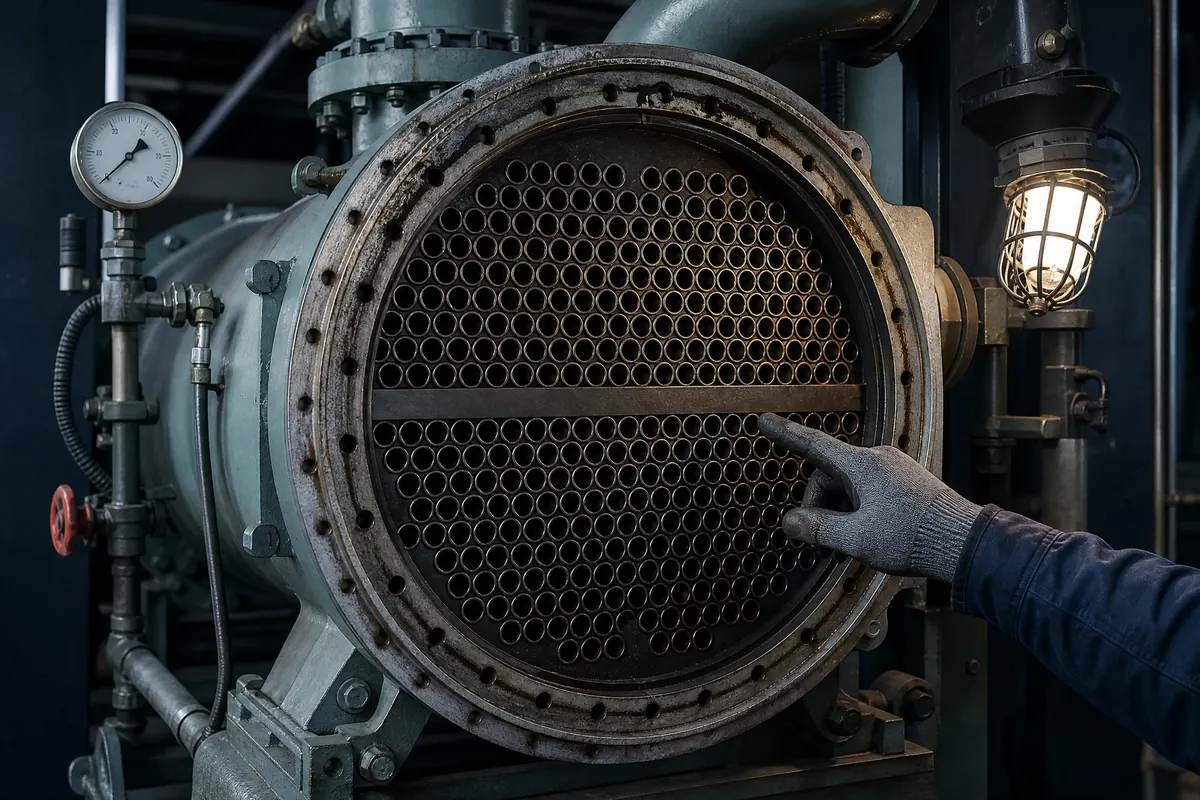
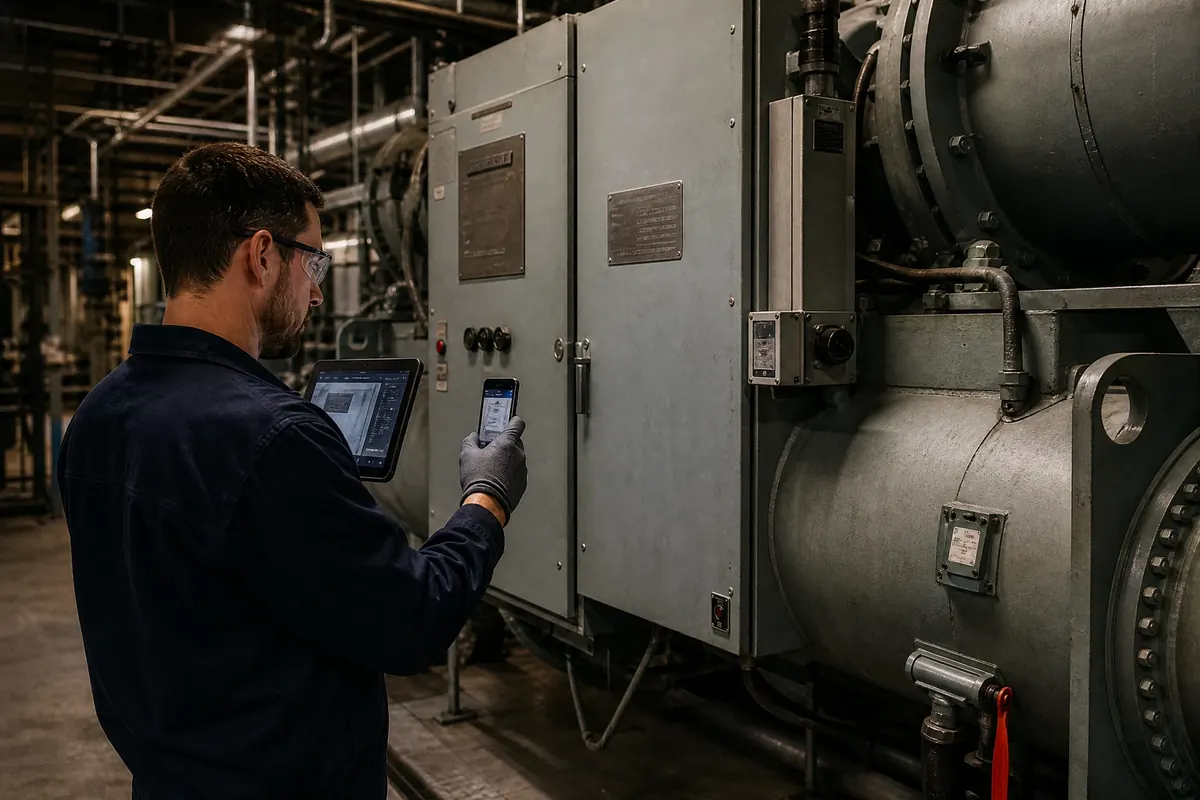
Industrial equipment specialist documenting a chiller nameplate

About the process

A Better Way to Review Used Chillers

Industrial Chiller Buyers is organized around a simple principle: an equipment offer is only meaningful when the machine and the work required to deliver it are both understood.

MethodEvidence first
ScopeMachine + site
CommunicationOne review path
Response pathDocumented review
01

We begin with evidence

The first review asks for the facts that change the decision: manufacturer, model, serial number, capacity, refrigerant, voltage, year, operating status, controls, service history, complete photographs, location, access, and timing. When information is unknown, it should remain an open question rather than becoming an assumption.

This approach is deliberately more detailed than requesting a model number and returning a generic price range. It gives owners and facility teams a basis they can check.

  • Machine identification
  • Condition evidence
  • Access documentation
  • Schedule and responsibility
A Better Way to Review Used Chillers inspection and project-planning evidence
FIELD NOTE Document the condition you can show, and label what still needs verification.
02

We separate the asset from the project

Equipment value reflects marketability, condition, completeness, and potential disposition. Field cost reflects the work required to isolate, recover, dismantle, move, lift, load, transport, and close out the site. Combining those too early can hide both opportunity and risk.

A documented net view makes proposals easier to compare and gives the project team a clearer path from current condition to final handoff.

03

We communicate what still needs verification

Preliminary calculator outputs and remote reviews are planning tools. Firm offers and removal scopes depend on supporting documentation and, for complex work, additional measurements, drawings, qualified input, or site review.

The goal is not to create false certainty. It is to organize the right facts so the next decision is faster, clearer, and more accountable.

DECISION RECORD / core

Evidence-to-terms sequence

Turn technical facts and open assumptions into a documented commercial next step.

A-01MethodEvidence first
B-02ScopeMachine + site
C-03CommunicationOne review path
01Identify
02Verify
03Price
04Confirm

Review package

What you can expect

Use this as a practical first-pass checklist. Additional information may be requested when the machine, access, or field scope is complex.

  1. 01

    A clear equipment and site intake

  2. 02

    Separate discussion of value and field cost

  3. 03

    Visible assumptions and required documentation

  4. 04

    Relevant calculators and planning guides

  5. 05

    No automatic contract created by a form submission

  6. 06

    A direct route to the next review step

Four-part review

Keep every controlling assumption visible.

The commercial result is more useful when the equipment, field method, timing, and handoff condition are discussed on the same page.

A / ASSET

Machine

Identification, capacity, configuration, condition, completeness and operating evidence.

B / PATH

Access

Elevation, openings, structural route, lifting area, staging and truck approach.

C / CONTROL

Facility

Shutdown, security, work hours, occupied areas, permits, housekeeping and owner rules.

D / HANDOFF

Scope

Responsibilities, delivery condition, loading, freight, schedule, closeout and open assumptions.

Project questions

What teams ask before committing.

What information should I send first?+

Send the manufacturer, model, serial number, nominal tonnage, refrigerant, voltage, approximate year, operating status, equipment and nameplate photographs, location, desired timing, and a short description of the removal path. Complete information helps separate equipment value from field cost.

Can removal cost be separated from the equipment offer?+

Yes. A documented proposal may distinguish gross equipment value, field and transportation cost, and the resulting net position. The structure depends on the machine, site access, schedule, and intended disposition path.

Do you review non-operational chillers?+

Yes. Non-operational equipment may still have rebuild, component, resale, or recycling value. Disclose known damage and missing components so the review is based on the correct condition.

Start with the facts

Send the machine and site details.

We will review the equipment, access, timing, and likely disposition path before discussing a firm commercial step.

Start the review
Call about a chiller you want to sell954-740-1983