
Sell Used Mammoth Chillers in Ohio equipment review, buyer, and removal planning

Brand + statewide coverage

Sell Used Mammoth Chillers in Ohio

We buy used Mammoth industrial chillers in Ohio. Send the machine, condition, location, access, and timing details for written purchase terms, confirmed payment timing before pickup, and a coordinated loading or removal plan.

ManufacturerMammoth
Review basisMachine + site
Purchase pathWritten terms
Response pathDocumented review
01

Start with the exact machine and seller objective

A useful review in Ohio starts with the exact chiller, not a generic price-per-ton shortcut. Record the manufacturer, complete model and serial numbers, nominal tonnage, voltage, refrigerant, compressor configuration, controls, approximate year, operating status, service history, included accessories, and known defects. Full-unit photographs and readable nameplates allow the buyer to distinguish a complete reuse candidate from a component or recycling project.

Mammoth equipment can include custom packaged, air-handling-integrated, air-cooled, and water-cooled systems. For this manufacturer, the review should document project model, configuration drawings, compressor circuits, controls, coils or vessels, dimensions, and included custom sections. Brand recognition helps identify the machine, but current condition, completeness, records, market fit, and a realistic route to loading determine whether a firm purchase discussion is possible.

  • Full equipment and nameplate photographs
  • Operating condition and known defects
  • Included controls, starters, drives, pumps, and accessories
  • Ownership, release date, location, and seller objective
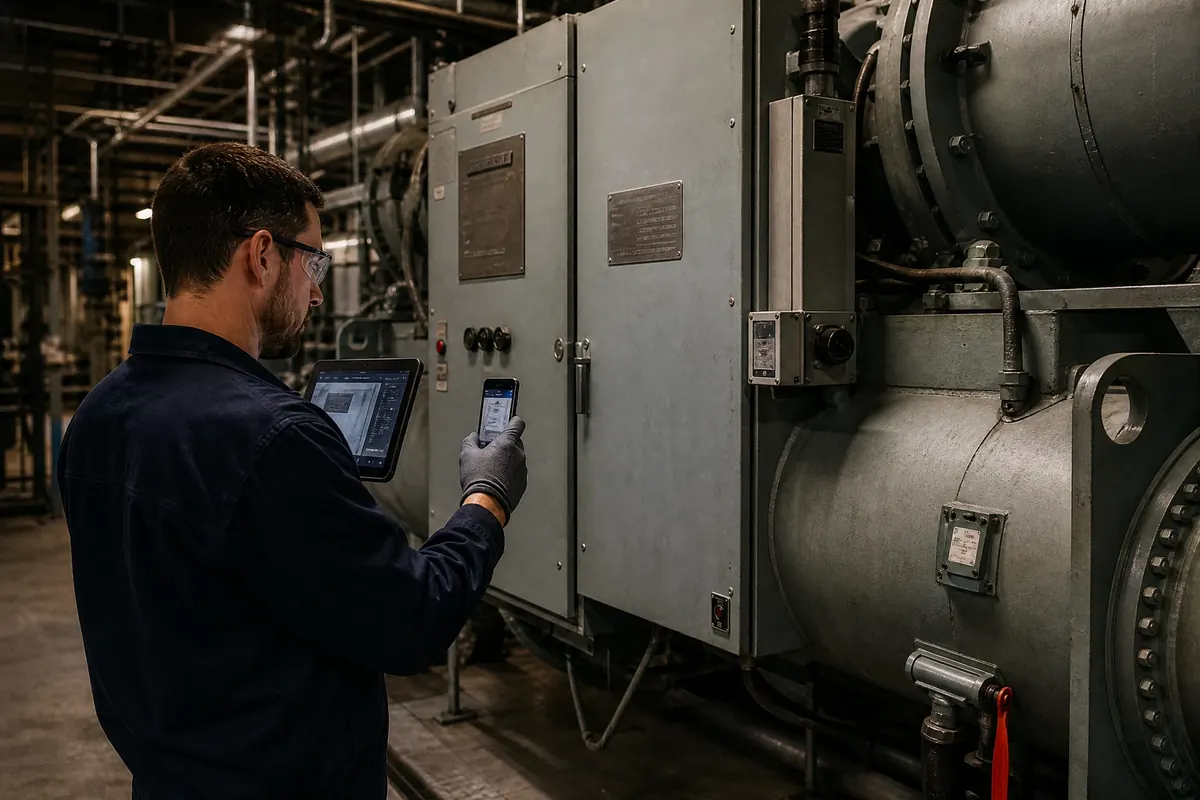
Sell Used Mammoth Chillers in Ohio inspection and project-planning evidence
FIELD NOTE Document the condition you can show, and label what still needs verification.
02

Match Mammoth value to the local recovery plan

Ohio projects can involve dense Midwest interstate networks, older industrial properties, and Great Lakes access. Representative facilities range from automotive, steel, healthcare, food, chemical, data-center, and manufacturing facilities, while outdoor equipment and temporary staging may also require planning for winter freezes, lake-effect weather, and humid summers. The first scope review should show floor level, equipment-room access, corridor and opening dimensions, overhead clearance, floor or structural limitations, crane or forklift setup, truck approach, work-hour controls, and the condition required after removal.

For Mammoth equipment, the recovery plan should account for planning around custom footprints, sectional construction, lifting points, and the documentation needed to identify the original package. A machine may leave intact, as protected major components, or as a controlled dismantling project. The selected method must support the intended disposition; unnecessary cutting can reduce reusable value, while an intact plan that ignores occupied healthcare or institutional buildings can create avoidable cost and schedule risk.

  • Route from machine to loading point
  • Isolation and refrigerant responsibility
  • Lift, dismantling, and structural assumptions
  • Truck access, freight, schedule, and closeout
03

Verify the Mammoth package before pricing it

Sell Used Mammoth Chillers in Ohio requires more than a recognizable nameplate. Document project model, configuration drawings, compressor circuits, controls, coils or vessels, dimensions, and included custom sections. Pair those records with photographs of the complete machine, compressor area, heat exchangers, controls, starters or drives, connection points, accessories, and any removed or damaged components. That evidence determines whether the Mammoth package can be marketed intact or should be evaluated for refurbishment, major components, or recycling.

For equipment located in Ohio, the file should also show current storage or operating condition, floor level, extraction route, lifting area, and loading access. The local context includes dense Midwest interstate networks, older industrial properties, and Great Lakes access; the buyer therefore needs both the machine evidence and the site evidence before purchase amount, responsibility, and pickup timing can be stated in writing.

  • Mammoth model, serial, controls, compressor, and refrigerant
  • Readable operating, service, fault, and repair records
  • Complete machine and Ohio access-route photographs
  • Included accessories, removed components, storage condition, and release timing
04

Choose the Mammoth disposition and recovery path

The review should decide whether the Mammoth asset is best handled as a complete operating machine, a refurbishment candidate, protected major components, or recyclable equipment. That decision depends on project model, configuration drawings, compressor circuits, controls, coils or vessels, dimensions, and included custom sections, current completeness, market fit, and whether the Ohio site can support planning around custom footprints, sectional construction, lifting points, and the documentation needed to identify the original package.

Written terms for sell used mammoth chillers in ohio should identify the exact equipment, represented condition, purchase amount, payment timing, owner and buyer responsibilities, pickup or removal scope, loading and freight, schedule, required documents, and final handoff condition. Payment timing is confirmed in writing before pickup is scheduled.

  • Confirm the intended reuse or recovery path
  • Resolve Mammoth completeness and protection requirements
  • Price the Ohio field and freight scope separately
  • Issue written purchase, payment, pickup, and handoff terms
05

Mammoth recovery planning across Ohio

Ohio facilities include automotive, steel, healthcare, food, chemical, data-center, and manufacturing facilities. The same Mammoth machine can require a different commercial and removal plan at a grade-level industrial site, an occupied institutional building, or a constrained central plant. Document project model, configuration drawings, compressor circuits, controls, coils or vessels, dimensions, and included custom sections, then identify the facility type, current equipment position, release condition, and whether the intended outcome is intact reuse, refurbishment, protected components, or recycling.

dense Midwest interstate networks, older industrial properties, and Great Lakes access Statewide planning should therefore confirm carrier access, dimensions and weights, lifting points, permitted staging, weather protection, and the route from the machine to the trailer. Conditions involving winter freezes, lake-effect weather, and humid summers should be addressed in the actual pickup plan rather than treated as a generic statewide promise.

  • Mammoth model, configuration, completeness, and records
  • Ohio facility type and equipment release condition
  • Lift, staging, carrier, weather, and transport constraints
  • Disposition and written pickup responsibilities

CONFIGURATION RECORD / brand

Nameplate-to-offer review

Keep manufacturer identity, configuration, operating evidence, and disposition on one record.

A-01ManufacturerMammoth
B-02Review basisMachine + site
C-03Purchase pathWritten terms
01Nameplate
02Controls
03Condition
04Disposition

Review package

What to send for sell used mammoth chillers in ohio

Use this as a practical first-pass checklist. Additional information may be requested when the machine, access, or field scope is complex.

  1. 01

    Mammoth manufacturer, model, serial number, nominal tonnage, voltage, refrigerant, and approximate year

  2. 02

    Brand-specific evidence: project model, configuration drawings, compressor circuits, controls, coils or vessels, dimensions, and included custom sections

  3. 03

    Operating status, service history, hours or starts when available, known faults, repairs, leaks, and missing components

  4. 04

    Full-unit, nameplate, controls, compressor, heat-exchanger, connection, damage, and storage photographs

  5. 05

    Exact location in Ohio, floor level, route dimensions, lifting area, loading access, and known facility restrictions

  6. 06

    Release date, desired completion, seller responsibilities, loading condition, ownership documents, and preferred transaction outcome

Four-part review

Keep every controlling assumption visible.

The commercial result is more useful when the equipment, field method, timing, and handoff condition are discussed on the same page.

A / ASSET

Machine

Identification, capacity, configuration, condition, completeness and operating evidence.

B / PATH

Access

Elevation, openings, structural route, lifting area, staging and truck approach.

C / CONTROL

Facility

Shutdown, security, work hours, occupied areas, permits, housekeeping and owner rules.

D / HANDOFF

Scope

Responsibilities, delivery condition, loading, freight, schedule, closeout and open assumptions.

Project questions

What teams ask before committing.

Do you buy used Mammoth industrial chillers in Ohio?+

We review installed, disconnected, staged, operational, non-operational, complete, and incomplete industrial chillers in Ohio. Purchase fit depends on exact identification, condition, completeness, documentation, marketability, access, removal scope, and transportation. Submit the machine and site details for a documented review.

What affects the offer for this equipment?+

Manufacturer, model, capacity, compressor configuration, age, refrigerant, controls, operating evidence, service history, condition, completeness, location, access, release date, lifting method, loading responsibility, freight, and intended reuse path all affect the commercial result. A single price-per-ton number cannot account for those differences.

Can removal or loading be coordinated with the purchase?+

Yes, when the field scope can be defined. The written terms should identify who handles shutdown, refrigerant, electrical and piping disconnects, dismantling, rigging, structural work, lifting, loading, freight, permits, protection, and cleanup. Complex scopes may require additional review before scheduling.

Are photographs required before I contact you?+

You may begin with the information available, but clear nameplate, full-unit, controls, compressor, heat-exchanger, access-path, and loading-area photographs usually make the review faster and more reliable. Photographs are strongly encouraged and additional evidence may be requested.

Start with the facts

Send the machine and site details.

We will review the equipment, access, timing, and likely disposition path before discussing a firm commercial step.

Start the review
Call about a chiller you want to sell954-740-1983