
Industrial specialist documenting a used chiller for equipment review

Net-value removal

Can Chiller Removal Be Offset by Equipment Value?

“Free removal” is not a universal promise. It is a possible net result when the recoverable value of suitable equipment supports the documented field, freight, and project costs.

Review basisMachine + site
Commercial viewValue − field cost
Project focusValue offset review
Response pathDocumented review
01

Start with the machine, not a price-per-ton shortcut

A useful value-offset chiller removal review begins with the exact chiller. Manufacturer, model family, serial number, nominal capacity, configuration, refrigerant, voltage, age, operating status, controls, completeness, and service history all influence the potential disposition path.

Full-equipment photographs and clear nameplate images make the first conversation more productive. Photographs of the compressor area, control cabinet, tube heads or coils, disconnected piping, and known damage help the reviewer distinguish an identifiable asset from an assumption.

  • Document every unit separately
  • Show controls and major components
  • Disclose missing parts and known faults
  • State whether equipment is installed, removed, or staged
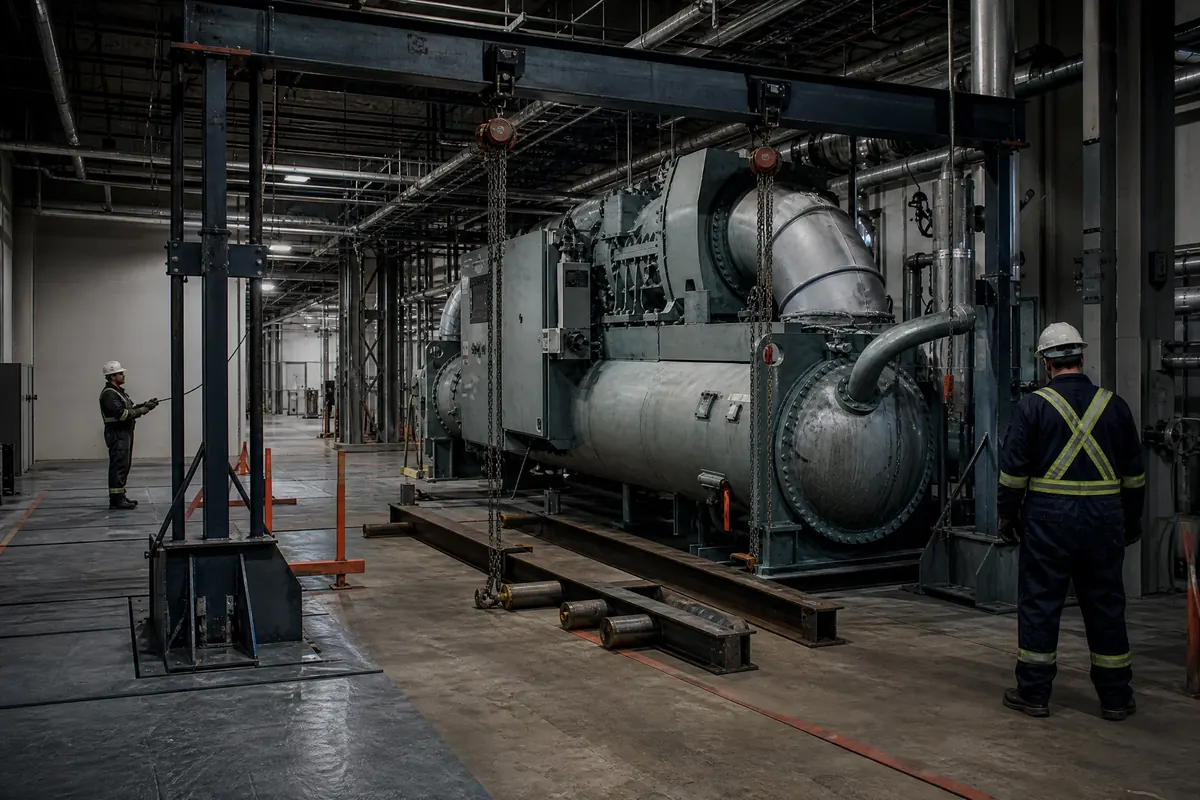
Can Chiller Removal Be Offset by Equipment Value? inspection and project-planning evidence
FIELD NOTE Document the condition you can show, and label what still needs verification.
02

Test the offset instead of assuming it

The review should estimate equipment value and removal cost independently. If the machine has a viable reuse or component market, the value may reduce the owner's project expense. If access is difficult, distance is long, or the asset has limited marketability, a no-cost outcome may not be realistic.

The right question is not whether every chiller can be removed for free. It is whether the documented value of this machine can responsibly support the documented scope at this site.

  • Identify gross recoverable value
  • Define all field responsibilities
  • Include freight and destination assumptions
  • Show the resulting net position
03

Keep equipment value and field cost visible

A machine can have meaningful reuse value and still be expensive to recover. An accessible unit may be inexpensive to load but have a limited buyer pool. Treating those questions separately makes bids easier to compare and exposes exclusions that a single headline number can hide.

The field side may include isolation, refrigerant coordination, electrical and piping disconnects, dismantling, rigging, structural protection, crane or forklift time, permits, loading, freight, and disposal. A firm commitment depends on a defined scope and documented access.

04

Build the handoff around facility operations

The removal method should respect shutdown windows, occupied areas, production schedules, security procedures, housekeeping expectations, loading access, and the sequence of replacement work. The responsibility matrix should identify who owns each disconnect, recovery, lift, load, and cleanup task.

When the facts are organized before mobilization, the owner, facility team, contractor, transporter, and equipment buyer can evaluate the same scope. That reduces avoidable uncertainty and makes the next commercial step more defensible.

SCOPE BOUNDARY / service

Responsibility control sheet

Separate equipment value from isolation, dismantling, rigging, loading, freight, and closeout.

A-01Review basisMachine + site
B-02Commercial viewValue − field cost
C-03Project focusValue offset review
01Asset
02Disconnect
03Move
04Handoff

Review package

Send a review package that can be checked

Use this as a practical first-pass checklist. Additional information may be requested when the machine, access, or field scope is complex.

  1. 01

    Manufacturer, model, serial number and nominal tonnage

  2. 02

    Refrigerant, voltage, approximate year and operating status

  3. 03

    Full-unit, nameplate, controls and component photographs

  4. 04

    Equipment location, floor level and route to the loading point

  5. 05

    Desired schedule, shutdown window and known access restrictions

  6. 06

    Your preferred outcome: sale, net-value removal, dismantling or recycling

Four-part review

Keep every controlling assumption visible.

The commercial result is more useful when the equipment, field method, timing, and handoff condition are discussed on the same page.

A / ASSET

Machine

Identification, capacity, configuration, condition, completeness and operating evidence.

B / PATH

Access

Elevation, openings, structural route, lifting area, staging and truck approach.

C / CONTROL

Facility

Shutdown, security, work hours, occupied areas, permits, housekeeping and owner rules.

D / HANDOFF

Scope

Responsibilities, delivery condition, loading, freight, schedule, closeout and open assumptions.

Project questions

What teams ask before committing.

What information should I send first?+

Send the manufacturer, model, serial number, nominal tonnage, refrigerant, voltage, approximate year, operating status, equipment and nameplate photographs, location, desired timing, and a short description of the removal path. Complete information helps separate equipment value from field cost.

Can removal cost be separated from the equipment offer?+

Yes. A documented proposal may distinguish gross equipment value, field and transportation cost, and the resulting net position. The structure depends on the machine, site access, schedule, and intended disposition path.

Do you review non-operational chillers?+

Yes. Non-operational equipment may still have rebuild, component, resale, or recycling value. Disclose known damage and missing components so the review is based on the correct condition.

Start with the facts

Send the machine and site details.

We will review the equipment, access, timing, and likely disposition path before discussing a firm commercial step.

Start the review
Call about a chiller you want to sell954-740-1983