
DIRECT ANSWER
The worth of a used 500-ton industrial chiller typically ranges from a few thousand dollars for older, non-operational units strictly valued for scrap, up to tens of thousands of dollars for late-model, well-maintained centrifugal or screw chillers with modern refrigerants and complete service logs. The exact valuation depends heavily on the manufacturer, year of production, operating hours, and the type of compressor utilized. Water-cooled centrifugal chillers from top-tier brands often command a premium if they operate on environmentally compliant refrigerants and have clean eddy current test reports. Conversely, units that have suffered compressor failures, require immediate tube replacement, or contain phased-out refrigerants may yield minimal returns once the high costs of professional rigging, refrigerant recovery, and heavy transport are factored into the equation. Market demand also fluctuates based on seasonal cooling needs and supply chain lead times for new equipment. Ultimately, a definitive valuation requires a comprehensive physical inspection, verification of operating logs, and an assessment of the site-specific extraction challenges that prospective buyers must navigate.
Primary Factors Influencing Chiller Valuation
The core components of a 500-ton chiller heavily dictate its attractiveness on the secondary market. High-efficiency centrifugal and rotary screw compressors are generally more desirable than older reciprocating models due to their reliability and lower operating costs. Buyers look closely at the brand reputation, availability of replacement parts, and the specific model's track record for longevity under continuous industrial loads. The chiller's physical condition, including the state of the evaporator and condenser bundles, is equally critical.
Age is a significant variable, but operating hours often tell a more accurate story of the machine's remaining lifespan. A ten-year-old chiller that served as a backup unit with low runtime hours may be valued significantly higher than a five-year-old unit that ran continuously at peak capacity in a harsh manufacturing environment. Furthermore, visual inspections for rust, corrosion, and signs of chronic leaks provide immediate indicators of how well the equipment was protected from environmental degradation.
The Impact of Refrigerant Types on Resale Value
Refrigerant regulations play a dominant role in determining whether a 500-ton chiller retains market value or becomes a liability. Chillers operating on modern, environmentally compliant refrigerants with low global warming potential (GWP) are highly sought after by facilities looking to upgrade their infrastructure without running afoul of tightening emissions standards. These units can often be redeployed immediately, preserving a substantial portion of their original capital value.
Conversely, machines utilizing older, phased-out refrigerants like R-22 or high-GWP alternatives face a steeply diminished buyer pool. The costs associated with retrofitting these chillers to accept modern refrigerants are frequently prohibitive, rendering the equipment obsolete for reuse. In such cases, the chiller's worth is largely reduced to the scrap value of its copper, aluminum, and steel components, minus the strict costs of legally recovering and disposing of the legacy refrigerant.
Assessing Maintenance Records and Operating History
A comprehensive and documented maintenance history is one of the strongest tools for maximizing a chiller's resale value. Prospective buyers and equipment brokers demand verifiable proof of routine servicing, oil analysis reports, and vibration testing results. Eddy current testing of the heat exchanger tubes is particularly scrutinized, as it reveals hidden wall thinning, pitting, or internal damage that could lead to catastrophic failure.
Without these records, buyers must assume the worst-case scenario regarding internal wear and tear, automatically discounting their offers to offset the risk of imminent major repairs. Detailed logs that demonstrate prompt attention to alarms, regular filter changes, and adherence to manufacturer-recommended overhaul schedules reassure buyers that the compressor and critical components have not been subjected to undue stress or neglect.
Additionally, the availability of the original factory documentation, including operation manuals, wiring diagrams, and performance run test data, adds tangible value. These documents simplify the re-commissioning process for the next owner and indicate a high level of professionalism in how the facility managed its critical infrastructure assets.
Logistics, Rigging, and Net Recovery Costs
The gross market value of a 500-ton chiller is rarely the amount the seller ultimately nets, due to the substantial costs associated with decommissioning and extraction. Removing a machine of this scale requires specialized heavy rigging, structural assessments, and often the temporary dismantling of facility walls or roofs. If the chiller is located in a deep basement or on a high-rise rooftop, the crane and logistical expenses can quickly consume tens of thousands of dollars.
Transportation also heavily impacts the final financial equation. Moving a 500-ton chiller requires specialized flatbed trailers, oversized load permits, and careful route planning to ensure safe transit to the buyer's location or a refurbishing facility. Sellers must carefully calculate these extraction and freight costs against the anticipated sale price to determine if selling the unit intact is economically viable, or if dismantling it on-site for material recovery presents a more realistic financial path.
Decision table
Questions that change the plan.
Are complete service logs and recent eddy current tests available?
Comprehensive records significantly boost buyer confidence and market value; missing logs result in heavily discounted offers.
Does the unit operate on modern, compliant refrigerants or phased-out gases?
Compliant units retain strong resale value, while legacy refrigerant models are often relegated to scrap material pricing.
How many total hours and starts are logged on the compressor?
Low hours relative to age increase worth, whereas high continuous usage indicates impending overhaul requirements.
Can the chiller be removed easily without major structural modifications?
Complex rigging, crane requirements, and difficult access directly subtract from the seller's net financial recovery.
Field checklist
Prepare the record before the work.
- 01
Verify the exact make, model, and year of manufacture from the original data plate
- 02
Compile all maintenance logs, oil analysis reports, and recent eddy current test results
- 03
Identify the specific refrigerant type and current charge status
- 04
Record total operating hours and the number of compressor starts
- 05
Assess the physical extraction path and note any structural obstacles or crane requirements
- 06
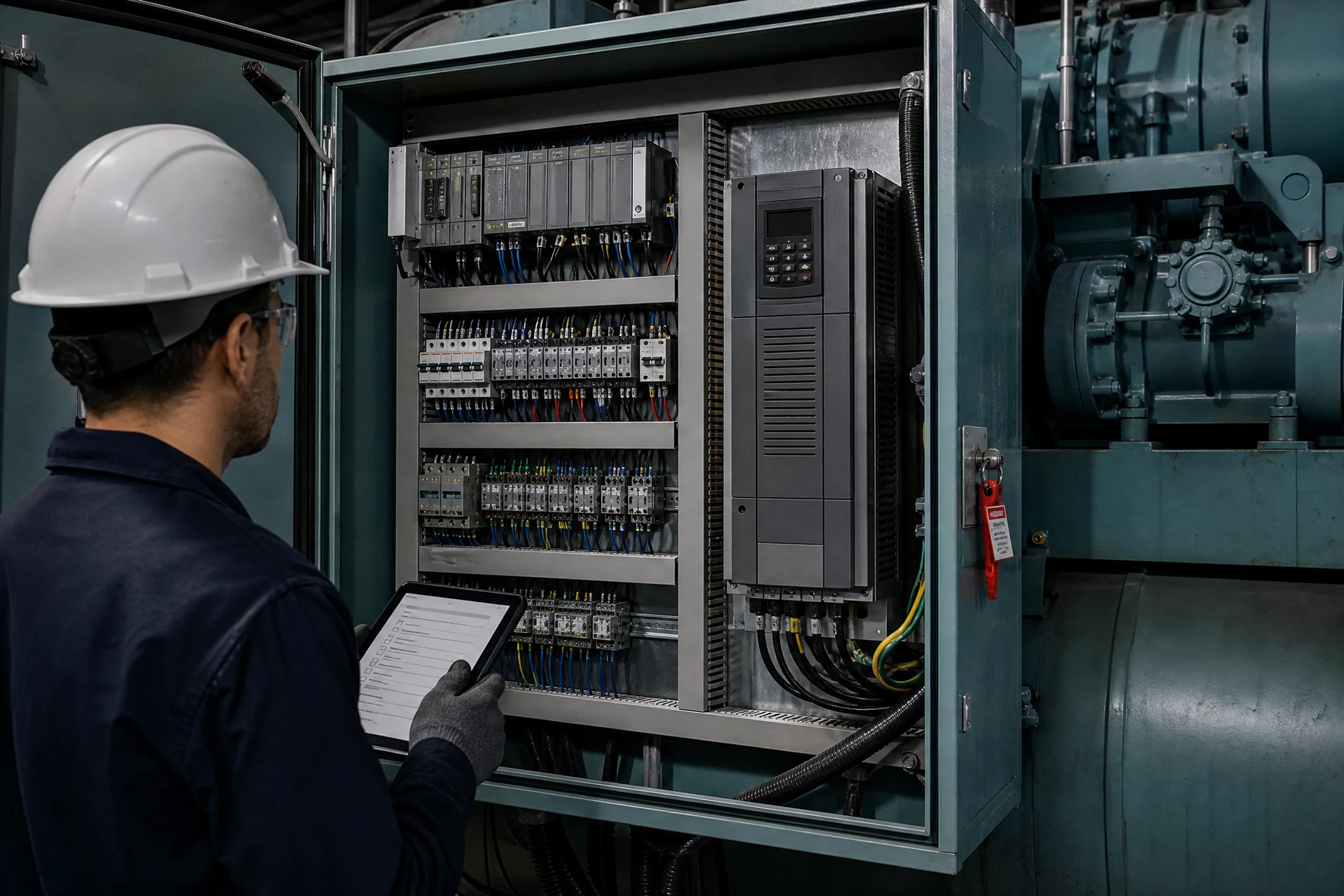
Photograph the chiller extensively, including the control panel, compressors, and any visible wear
Common questions
Before the next step.
Does the brand of the 500-ton chiller affect its value?+
Yes, major manufacturers with strong reputations for reliability, widespread parts availability, and established service networks typically command higher resale prices on the secondary market.
Can I sell a chiller that is no longer operational?+
Non-operational chillers can still be sold, but their value is generally limited to the scrap weight of their internal metals or specific salvageable components, rather than functional equipment pricing.
Who pays for the removal of the chiller?+
Removal costs are negotiable and depend on the contract terms. However, buyers will always factor the cost of rigging, extraction, and freight into their initial purchase offer, reducing the net payout to the seller.
How do I prove the condition of the chiller to a buyer?+
Providing a comprehensive history of maintenance logs, recent oil sample analyses, eddy current test reports, and allowing a physical inspection by a qualified technician are the best ways to prove condition.