
DIRECT ANSWER
Recycling an industrial chiller requires a coordinated sequence of decommissioning, hazardous material abatement, and mechanical dismantling to recover valuable metals like copper, aluminum, and steel. The process begins with the complete, documented recovery of all refrigerants and compressor oils by EPA-certified technicians, ensuring environmental compliance and safety. Once the system is fully evacuated and electrically isolated, the physical dismantling phase separates the heat exchangers, compressors, and structural framing. Heavy rigging and specialized transport are necessary to move these large assemblies to processing facilities where they are further broken down. Because chiller recycling involves significant safety, environmental, and logistical variables, every step must be managed by qualified contractors who understand site-specific constraints. Facility managers should not expect a standardized financial return, as scrap values fluctuate and removal costs often offset material gains. Proper disposition prioritizes regulatory adherence and safe handling over immediate revenue generation.
Decommissioning and Refrigerant Recovery
The foundation of recycling any industrial cooling equipment is the safe and legal removal of its working fluids. Before any physical dismantling begins, certified technicians must recover all refrigerant charges using specialized evacuation equipment. This step is strictly regulated, requiring precise documentation of the volumes recovered and the methods used to capture both high-pressure and low-pressure refrigerants without venting to the atmosphere.
Following refrigerant removal, the compressor oils and any secondary heat transfer fluids, such as glycol solutions, must be drained and contained. These fluids often require separate handling and disposal protocols to prevent soil or water contamination during the subsequent teardown. Only after the system is entirely depressurized and purged of hazardous liquids can the mechanical separation of the chiller's major components safely commence.
Electrical Isolation and Control Panel Dismantling
Industrial chillers are integrated with high-voltage electrical supplies and complex control systems that must be systematically neutralized. Electricians must perform a verified lockout/tagout procedure, physically disconnecting the unit from the facility's power grid. The removal of the control panels, variable frequency drives, and motor starters follows the power disconnection, isolating the electronic waste from the heavier mechanical scrap.
These electrical components contain printed circuit boards, copper wiring, and sometimes older components that may require specialized electronic recycling (e-waste) streams. Segregating the electrical panels early in the recycling process prevents contamination of the bulk metal scrap and ensures that hazardous materials found in older switches or capacitors are identified and routed to the correct processing facilities.
Mechanical Teardown and Metal Separation
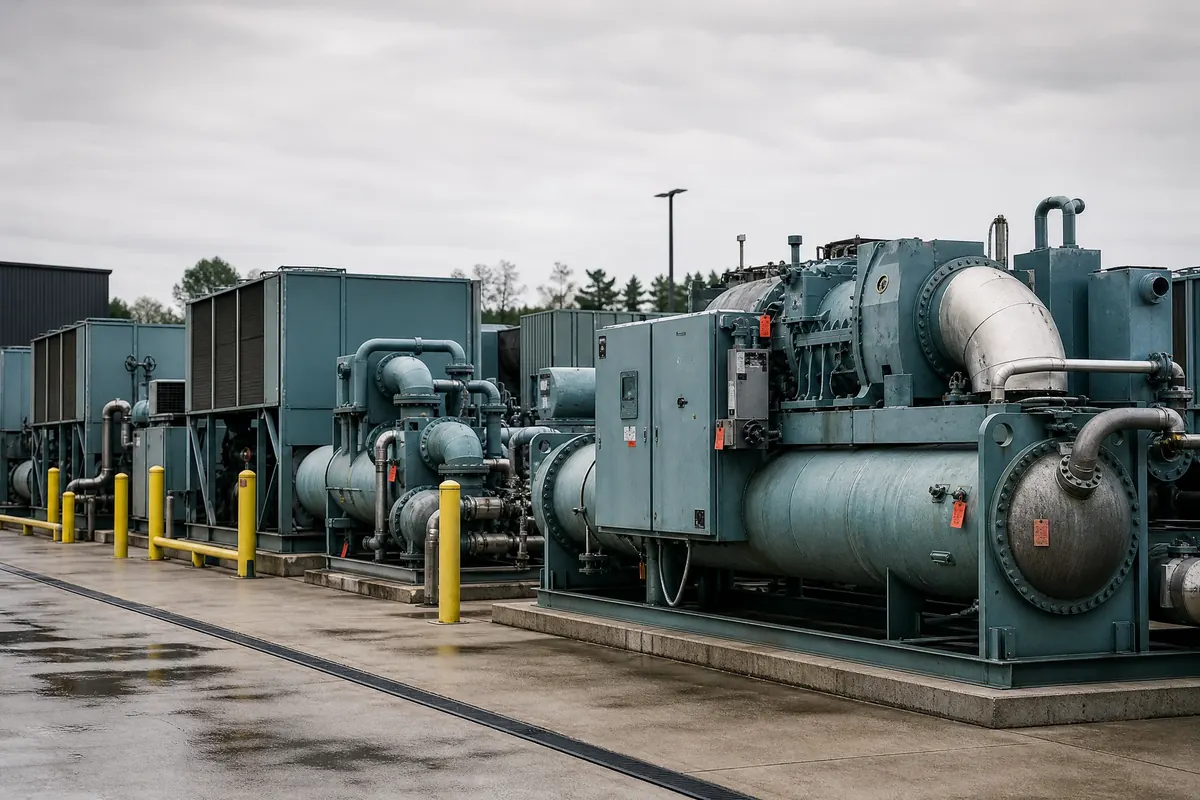
The core of the recycling value lies in the mechanical teardown, where the chiller is separated into its primary metal categories. The evaporator and condenser barrels, often containing miles of copper or cupronickel tubing, are cut away from the main carbon steel frame. Compressors, which house dense cast iron and heavy copper motor windings, are typically rigged out as single units for specialized processing.
Effective separation at the facility level reduces transportation costs and maximizes the purity of the scrap streams. Torches, heavy shears, and reciprocating saws are employed to break the structural footprint down to manageable sizes. This phase introduces significant fire and physical hazards, demanding strict adherence to hot work protocols and site-specific safety plans to protect the surrounding infrastructure.
Rigging, Transport, and Final Processing
Moving the dismantled sections of a chiller from a mechanical room or rooftop to a recycling facility requires heavy rigging expertise. Cranes, gantries, and heavy-duty forklifts must be coordinated to safely lower and load the structural steel, vessels, and compressors onto flatbed trailers. The logistical planning must account for floor load capacities, door dimensions, and overhead clearances within the active facility.
Once transported to an industrial scrap yard, the components undergo further mechanical shredding and magnetic separation. Ferrous metals like steel and iron are sorted from non-ferrous materials such as copper, brass, and aluminum. The final processing yields raw commodities ready for foundry melting, completing the recycling lifecycle and returning the materials to the global supply chain.
Decision table
Questions that change the plan.
What specific refrigerant is currently in the system?
Dictates the required recovery equipment and the disposal or reclamation costs.
Is the chiller located in a basement, mechanical room, or rooftop?
Determines the rigging equipment needed and significantly impacts the total removal cost.
Are the heat exchanger tubes copper, cupronickel, or titanium?
Affects the potential scrap value and the methods used for mechanical separation.
Was the equipment manufactured before current hazardous material bans?
May necessitate specialized handling for older electrical components or insulation materials.
Field checklist
Prepare the record before the work.
- 01
Verify all power sources are disconnected and locked out by qualified electricians
- 02
Ensure EPA-certified technicians recover and document all refrigerants and oils
- 03
Drain and properly contain all secondary fluids like glycol or chilled water
- 04
Segregate electronic control panels and wiring for specialized e-waste recycling
- 05
Plan rigging paths and verify floor load capacities before moving heavy components
- 06
Confirm that all transportation complies with local heavy hauling and environmental regulations
Common questions
Before the next step.
Can I vent the refrigerant if the chiller is broken?+
No. Venting refrigerant is illegal and environmentally damaging. All refrigerants must be recovered by certified technicians using approved equipment, regardless of the chiller's operational status.
Will the scrap value cover the cost of removal?+
Rarely. The costs associated with labor, specialized rigging, and hazardous material disposal typically exceed the fluctuating market value of the recovered copper, aluminum, and steel.
Do I need a permit to dismantle a chiller on site?+
Permit requirements vary by municipality. Hot work permits, crane permits, and environmental disposal documentation are frequently required and must be verified locally before work begins.
What happens to the oil inside the compressor?+
Compressor oil must be drained, tested for contaminants, and processed by a licensed waste oil facility. It cannot be disposed of in standard commercial waste streams.