
DIRECT ANSWER
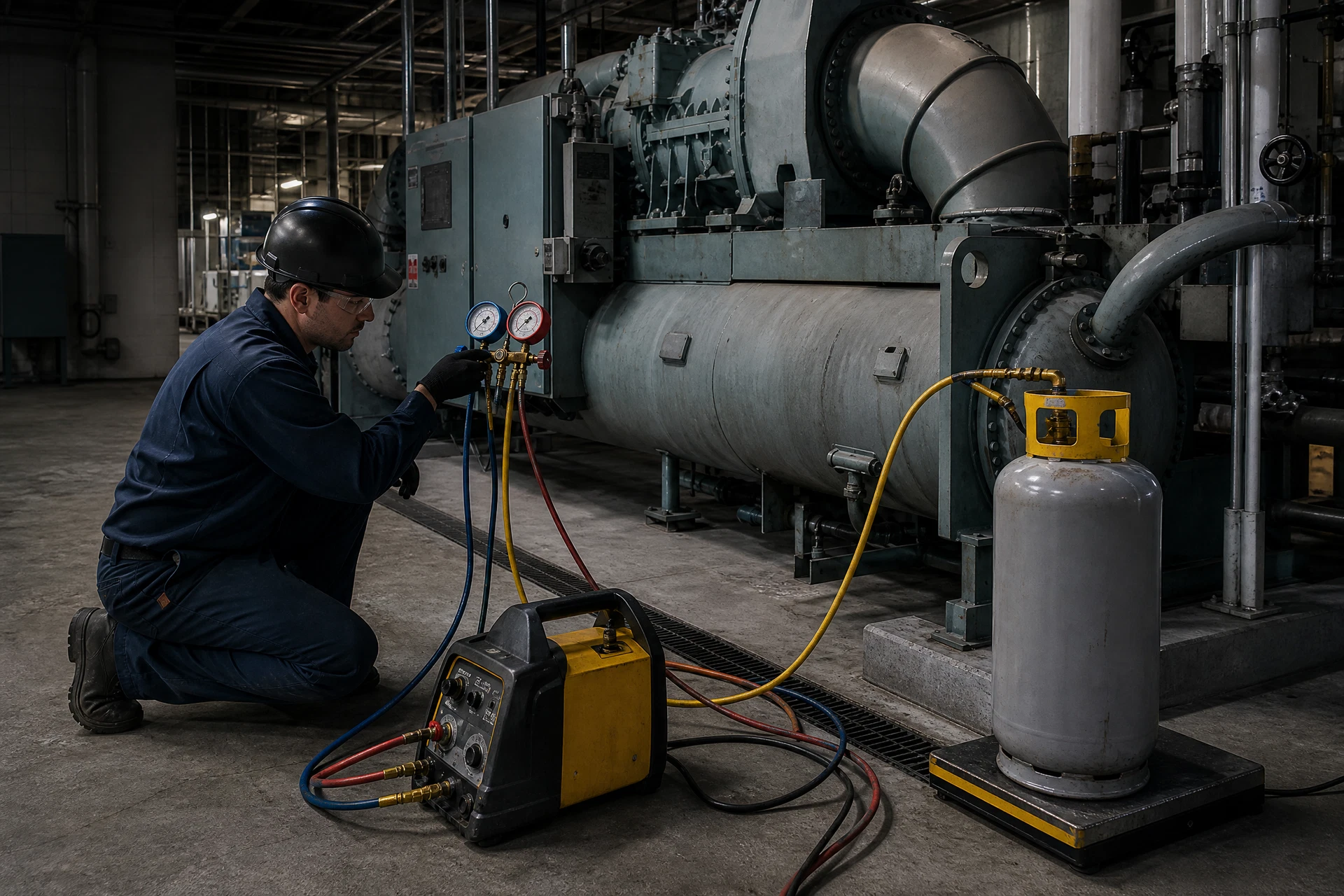
Recovering refrigerant from an industrial chiller involves systematically transferring the chemical charge from the unit into approved recovery cylinders using specialized recovery machines. This process must be performed by EPA-certified technicians (or local equivalents) equipped with manifold gauges, recovery units, and appropriately rated scales to monitor the transfer weight. The recovery begins with liquid extraction, which removes the bulk of the charge rapidly, followed by vapor recovery to pull the remaining refrigerant from the system until the required vacuum level is achieved. Depending on the chiller type—such as low-pressure centrifugal units versus high-pressure screw chillers—the exact procedures, pressure thresholds, and equipment specifications will vary significantly. It is crucial to note that this overview does not substitute for certified engineering or environmental protocols. All recovery operations must strictly adhere to site-specific conditions, safety standards, and local environmental regulations, as improper handling can result in severe safety risks and substantial regulatory penalties.
Preparing for the Recovery Process
Before initiating refrigerant recovery from an industrial chiller, comprehensive site preparation and equipment verification are mandatory. Technicians must first identify the exact type and total volume of refrigerant documented on the chiller's nameplate, as this dictates the required capacity of the recovery cylinders and the specific type of recovery machine needed. High-pressure refrigerants like R-134a or R-410A require different handling protocols and cylinder pressure ratings compared to low-pressure refrigerants such as R-123.
Additionally, the work area must be secured, well-ventilated, and equipped with appropriate leak detection and safety gear. Technicians should inspect all hoses, manifold gauges, and recovery units for integrity to prevent accidental venting. Scales must be calibrated to ensure accurate tracking of the recovered weight, which is critical for both regulatory reporting and preventing cylinder overfill. Cylinder capacity should never exceed 80% of its water weight capacity to allow for thermal expansion.
Executing Liquid and Vapor Recovery
The actual extraction process generally occurs in two distinct phases: liquid recovery followed by vapor recovery. Liquid recovery is executed first because it is the fastest method to remove the majority of the refrigerant mass. By connecting the recovery machine to the lowest points of the chiller system, technicians can push or pull the dense liquid into the recovery cylinders. In some large industrial systems, a push-pull method is utilized, where vapor is drawn from the cylinder, pressurized, and pushed back into the chiller to force the liquid out.
Once the liquid phase is complete and the system pressure drops, the remaining refrigerant exists as a vapor. The recovery machine is then reconfigured to pull this vapor from the system, compress it, condense it back into a liquid, and deposit it into the cylinder. This phase is slower but essential for achieving the required vacuum levels mandated by environmental regulations. The system must be held at a vacuum to verify that no residual refrigerant is boiling off from the compressor oil.
Handling Compressor Oil and Residuals
Refrigerant recovery is rarely limited to just the chemical charge; it inherently involves managing the compressor lubricating oil. In many industrial chillers, a significant amount of refrigerant remains entrained within the oil. During the vapor recovery phase, applying heat to the oil sump—often using the chiller’s built-in oil heaters—can help boil off the trapped refrigerant, ensuring a more complete recovery and preventing sudden outgassing when the system is later opened to the atmosphere.
After the refrigerant is fully evacuated, the oil itself must be safely drained, tested, and disposed of or recycled according to environmental guidelines. Technicians must be cautious, as the oil can be highly acidic or contaminated, especially if the chiller experienced a compressor burnout. Proper documentation of the oil removal, along with the refrigerant weight, forms a critical part of the decommissioning or maintenance ledger.
Documentation and Regulatory Compliance
The final, yet ongoing, phase of refrigerant recovery is strict adherence to documentation and regulatory reporting. Environmental protection agencies require meticulous record-keeping of the initial charge, the amount recovered, the date of service, and the certification details of the technicians performing the work. Every cylinder must be tagged and weighed, with the data logged into the facility's maintenance records to prove that no unauthorized venting occurred.
For facility owners and plant managers, these records are essential for demonstrating compliance during audits and for transferring liability when the equipment is sold or scrapped. If the recovered refrigerant is to be reclaimed or destroyed, a chain of custody must be established with the receiving facility. Failing to maintain accurate logs can result in severe fines and complicate the final removal and disposal of the chiller infrastructure.
Decision table
Questions that change the plan.
Is the system using high-pressure or low-pressure refrigerant?
Dictates the required recovery equipment ratings, cylinder types, and specific extraction procedures.
What is the total weight of the refrigerant in the chiller?
Determines the number and size of recovery cylinders needed and the estimated time for completion.
Has the chiller suffered a compressor burnout or major leak?
May require additional filtration during recovery and specialized handling of contaminated oil and acid.
Are there logistical constraints for moving heavy recovery cylinders?
Affects rigging plans, labor requirements, and the safe transport of pressurized hazardous materials.
Field checklist
Prepare the record before the work.
- 01
Verify technician EPA certification and site access credentials
- 02
Confirm chiller nameplate data for refrigerant type and total charge volume
- 03
Inspect and calibrate recovery machines, manifold gauges, and weight scales
- 04
Ensure recovery cylinders are appropriately rated and not filled beyond 80% capacity
- 05
Execute liquid push-pull recovery followed by complete vapor extraction to required vacuum
- 06
Document recovered weights, oil disposal, and maintain chain of custody logs
Common questions
Before the next step.
How long does it take to recover refrigerant from an industrial chiller?+
The duration depends on the chiller's size, the type of refrigerant, and ambient temperatures. Large industrial units can take anywhere from several hours to multiple days to achieve the required vacuum levels.
Can the recovered refrigerant be reused in another system?+
Recovered refrigerant can often be reused in equipment owned by the same entity, provided it is not severely contaminated. Otherwise, it must be sent to an EPA-certified facility for reclamation or destruction.
What happens if the recovery cylinder is overfilled?+
Overfilling a cylinder beyond 80% of its water capacity leaves no room for liquid expansion as temperatures rise, which can lead to catastrophic hydrostatic rupture and severe safety hazards.
Why is the push-pull method used during recovery?+
The push-pull method is highly efficient for transferring large volumes of liquid refrigerant quickly, reducing the overall time required before switching to the slower vapor recovery phase.